
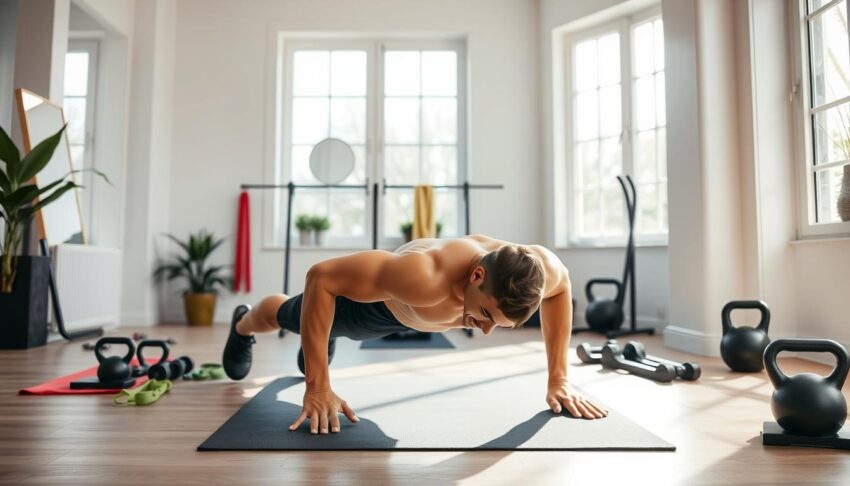
Welcome to the wonderful world of fitness right in your own living space! You don’t need a fancy gym membership or expensive equipment to start your journey toward better health.
Resistance exercises are an essential part of any complete fitness routine. They’re not just for athletes or bodybuilders. Everyone can benefit from building a stronger physique.
Bodyweight movements use your own physique as resistance without needing equipment. Just 20 minutes, five days per week can deliver noticeable results. You’ll build endurance and flexibility while getting stronger.
This guide provides everything you need to start a successful program. We’re excited to help you begin this journey toward improved fitness!
Key Takeaways
- Fitness improvements are achievable right in your own space
- Resistance exercises benefit everyone, not just athletes
- Bodyweight movements require no special equipment
- Short, consistent sessions deliver real results
- This approach builds endurance alongside muscle development
- Flexibility improvements come with regular practice
- You can start seeing changes with minimal time investment
Why You Should Start Home Strength Training Workouts Today
Imagine building a stronger physique without ever leaving your house. Your living room becomes your personal fitness studio whenever you want. No traffic, no crowded spaces, just you and your goals.
The convenience factor alone makes this approach life-changing. You eliminate commute time and equipment waiting. Your schedule becomes completely flexible for exercise sessions.
Financial savings add another compelling reason. Forget about monthly gym fees or expensive gear. Basic bodyweight movements deliver incredible results for free.
“The best time to plant a tree was 20 years ago. The second best time is now.”
Privacy concerns disappear when you exercise in your own space. Nobody watches while you learn new movements. This creates a comfortable environment for beginners.
Progress at your own pace without comparing yourself to others. Listen to your body and adjust intensity as needed. Consistency becomes easier without external pressure.
Modern life demands efficient solutions for health. Home-based routines fit perfectly into busy schedules. You can start immediately with zero equipment required.
Common exercise barriers simply vanish. Time constraints, cost concerns, and self-consciousness fade away. What remains is pure, accessible fitness potential.
Your journey toward better health begins today. Every small step counts toward significant transformation. Your future self will thank you for starting now.
The Incredible Benefits of Strength Training
Discover how regular resistance exercise can transform your daily life in remarkable ways. These advantages extend far beyond physical appearance, touching every aspect of your wellbeing.
The positive changes begin almost immediately and continue to compound over time. You’ll notice improvements in how you feel, move, and think throughout your day.
Boosts Energy and Improves Mood
Regular resistance exercise significantly increases your energy levels. You’ll feel more vibrant and alert throughout your entire day.
This physical activity triggers endorphin release, creating natural mood enhancement. Many people experience reduced anxiety and depression symptoms.
Sleep quality often improves dramatically, especially for older adults. Better rest leads to more energy and improved mental clarity.
Your brain health gets a boost from consistent physical activity. Cognitive functions sharpen with regular practice.
Builds Muscle and Aids Weight Management
Resistance exercise builds lean muscle mass while reducing body fat. This creates a more efficient metabolism that burns calories even at rest.
Your body becomes better at managing weight over the long term. Increased muscle mass helps maintain healthy body composition.
The metabolic benefits continue working long after your session ends. This creates a powerful calorie-burning effect throughout your week.
Different muscle groups respond beautifully to targeted exercise. Your arms, legs, back, chest, and shoulders all benefit from proper training.
Enhances Overall Health and Wellbeing
Bone density improvements help combat osteoporosis risk. Your skeletal system becomes stronger and more resilient.
Flexibility and range of motion increase with regular practice. This makes daily movements easier and more comfortable.
Chronic condition management becomes more effective. Symptoms of arthritis, diabetes, and back pain often reduce significantly.
Posture, balance, and stability all show marked improvement. This reduces fall risk and enhances movement confidence.
Cardiovascular health receives important benefits too. Heart disease risk can decrease with consistent resistance exercise.
Overall quality of life improves dramatically. You maintain independence and vitality as you age, enjoying greater wellbeing every day.
What You Need: Your At-Home Gym Setup
Creating an effective workout area doesn’t require expensive investments or massive renovations. You can begin your fitness journey with minimal gear and gradually build your collection as your commitment grows.
The beauty of this approach lies in its flexibility. You control what equipment enters your space and when. This eliminates financial pressure while maintaining progress potential.
Essential (But Optional) Equipment
While bodyweight movements provide excellent results, certain tools can enhance your experience. These items offer progressive resistance without breaking your budget.
An exercise mat creates comfortable flooring for various exercises. Resistance bands provide versatile tension for multiple muscle groups. Dumbbells allow for precise weight selection as you grow stronger.
Additional options include kettlebells for dynamic movements. Stability balls improve core engagement during certain exercises. Medicine balls add explosive power to your routine.
Remember: every piece is optional. You can achieve remarkable results using only your body weight. Equipment simply expands your exercise variety.
Household Item Substitutions
Don’t have traditional weights? Your home already contains perfect alternatives. Get creative with everyday objects for effective resistance training.
Water bottles make excellent beginner weights for arm exercises. Canned goods work well for smaller movement patterns. Sandbags can be created from durable bags filled with sand or rice.
Chairs provide stable surfaces for tricep dips and elevated movements. Towels can substitute for resistance bands in certain stretches. Stairs offer natural platforms for step exercises.
“The best equipment is the equipment you’ll actually use consistently.”
Your space requirements are surprisingly minimal. You only need enough room to extend your arms and legs fully. Most living rooms or bedrooms provide adequate area.
Choose a well-ventilated area with good lighting. Ensure the floor surface provides stable footing. Keep your space organized to maintain motivation.
As your strength improves, consider adding one piece at a time. Focus on items that serve multiple exercise purposes. Quality matters more than quantity in home setups.
Budget-friendly options include secondhand sporting goods stores. Online marketplaces often feature gently used equipment. Many resistance bands and mats are surprisingly affordable new.
Safety should always guide your setup choices. Ensure clear pathways around your exercise area. Store equipment properly to prevent tripping hazards.
Create an inspiring environment with personal touches. Music, motivational quotes, or plants can boost your mood. Your space should feel inviting and energizing.
Furniture like sturdy chairs can safely support certain movements. Always test stability before putting full weight on household items. Progress resistance by using heavier household objects over time.
Choose equipment that matches your current fitness level. Beginners might start with lighter resistance options. More experienced individuals may prefer adjustable dumbbells or bands.
Your home gym should evolve with your goals. Listen to your body’s needs and adjust accordingly. The perfect setup is the one that keeps you moving consistently.
Strength Training Fundamentals: Form and Safety First
Proper technique separates effective exercise from potential injury. Mastering these fundamentals ensures your sessions deliver maximum benefits while keeping you safe.
Good form activates the right muscle groups efficiently. It prevents strain on joints and connective tissues. Every movement becomes more productive with proper alignment.
The Importance of a Proper Warm-Up
Never skip your preparation routine. A good warm-up increases blood flow to muscles. It prepares your entire body for the coming activity.
Spend 5-10 minutes on dynamic movements before starting. Brisk walking or jogging in place raises your heart rate gradually. Include movements that engage your legs, arms, and major muscle groups.
Dynamic stretches improve mobility and flexibility. They reduce stiffness and enhance performance. Your risk of injury decreases significantly with proper preparation.
Mastering Breathing and Controlled Movement
Breathing technique affects your blood pressure and energy levels. Never hold your breath during exertion. Exhale during the most challenging part of each exercise.
Control your movements with a consistent rhythm. Count two seconds for the lifting phase. Count two seconds for the lowering phase.
Maintain spinal alignment throughout all exercises. Keep your back straight and shoulders relaxed. Protect your joints by avoiding hyperextension.
Use mirrors or video recordings to check your positioning. Correct form ensures you’re activating the intended muscles. Listen to your body’s signals about discomfort versus pain.
How to Cool Down Effectively
Finish every session with 5-10 minutes of gradual recovery. Walking in place helps your heart rate return to normal. Gentle stretching improves flexibility and reduces soreness.
Deep breathing exercises enhance relaxation. They help your body transition to a resting state. This process supports better recovery between sessions.
Stay hydrated before, during, and after your activity. Water supports muscle function and overall performance. Proper hydration aids in temperature regulation and joint lubrication.
When fatigue sets in, focus on maintaining quality movements. It’s better to do fewer repetitions with perfect form than many with poor technique. Your consistency with these fundamentals builds lasting results.
Your Sample Weekly Home Workout Plan
Organizing your exercise days creates a roadmap for sustainable strength development. This structured approach ensures all muscle groups receive proper attention while allowing adequate recovery time.
A balanced schedule targets your lower body, upper body, and core throughout the week. This rotation prevents overtraining while maximizing results from each session.
Balancing Lower Body, Upper Body, and Core
Your ideal schedule alternates between focus areas. Monday, Wednesday, and Friday target lower body muscles plus core exercises.
Tuesday, Thursday, and Saturday concentrate on upper body development with additional core work. Sunday features core-only movements for active recovery.
This rotation gives larger muscle groups proper rest between sessions. Your legs, glutes, back, and arms need 48 hours to repair and strengthen.
Core muscles recover faster and can handle daily stimulation. Their smaller size allows more frequent training without overexertion.
Understanding Recovery and Rest Days
Recovery days are when real strength building occurs. Muscle fibers repair themselves during rest periods, becoming stronger than before.
Research shows similar results whether combining all training in one day or splitting routines. The NHS recommends strength-based exercise at least twice weekly with full recovery days between sessions.
For those preferring three longer sessions weekly, combine upper and lower body circuits on alternating days. Always skip a day between sessions targeting the same muscle groups.
Listen to your body’s signals about recovery needs. Adjust intensity based on fatigue levels or soreness. Progress gradually over weeks and months.
Active recovery days maintain movement while promoting healing. Light walking or stretching supports circulation without straining muscles.
Track your progress within this weekly structure. Note improvements in endurance, form, and strength. Celebrate small victories along your fitness journey.
Lower Body Strength Circuit: Exercises for Legs and Glutes
Your legs and glutes form the foundation of your physical power. This circuit targets these important muscle groups with precision and effectiveness.
Each movement builds functional strength while improving balance and stability. You’ll notice improvements in daily activities and overall movement quality.
Glute Bridge
Begin lying on your back with knees bent and feet flat. Your arms should rest comfortably at your sides.
Press through your heels to lift your hips toward the ceiling. Squeeze your glutes at the top position for one second.
Lower back down with control and repeat for 10 repetitions. Focus on engaging your glute muscles rather than compensating with your back.
Walking Squat
Start with feet hip-width apart in a comfortable squat position. Keep your chest up and core engaged throughout.
Step sideways into a wide stance squat, then bring your other foot to meet it. Continue this lateral movement for 10 steps each direction.
This exercise improves hip mobility and lateral stability. Maintain proper form throughout the entire movement pattern.
Squat with Knee Lift
Begin in a standard squat position with good alignment. As you stand up, lift one knee toward your chest.
Return to the squat position and repeat on the opposite side. Perform 10 repetitions per side for balanced development.
This dynamic movement adds cardiovascular benefits to strength building. It also challenges your balance and coordination.
Side Lunge with a Twist
Step out to the side into a controlled lunge position. As you return to center, lift your knee and twist your torso.
This combination works your lower body while engaging your core muscles. Complete 10 repetitions before switching sides.
The twisting motion enhances rotational strength and spinal mobility. Keep movements smooth and controlled throughout.
½ Lunge Walking Lunge
Step forward into a partial lunge, bending both knees halfway. Continue walking forward with these controlled half lunges.
Perform 20 repetitions to build endurance and muscular stamina. This exercise is excellent for beginners building confidence.
Partial range movements allow focus on proper form before advancing. They reduce joint stress while building fundamental strength.
Standing Leg Lift to the Back
Stand tall on one leg with your core engaged. Lift your opposite leg straight back behind you.
Focus on using your glute muscles to control the movement. Complete 10 repetitions before switching to the other side.
This isolation exercise targets your glutes specifically. It helps develop mind-muscle connection for better activation.
Remember to breathe consistently throughout all exercises. Exhale during the exertion phase and inhale during the release.
Maintain proper spinal alignment by keeping your back straight. Engage your core muscles to protect your lower back.
Start with the recommended repetitions and adjust based on your fitness level. Consistency with proper form yields the best results over time.
Upper Body Strength Circuit: Exercises for Arms, Back, and Chest
Now let’s focus on building a powerful upper frame. This circuit targets your arms, back, and chest with effective movements. You’ll develop better posture and functional power for daily activities.
Each exercise uses your body weight for resistance. No special equipment is needed. Proper form ensures maximum results and safety.
Alligator Mouth Flies
Stand with feet hip-distance apart and knees slightly bent. Hinge forward slightly at your waist while engaging your core.
Reach your right arm forward aligned with your ear. Simultaneously extend your left arm backward. This creates a diagonal line engaging multiple muscle groups.
Return to the starting position and alternate sides. This movement develops shoulder stability and back muscles effectively.
Pushups on the Knees
Begin on your hands and knees with shoulders above wrists. Walk your hands forward about one foot to position your shoulders correctly.
Engage your core and bend your elbows outward. Lower your chest toward the floor while maintaining a straight back. Press through your palms to return upward.
Complete 10 repetitions. This modified version builds chest strength safely for various fitness levels.
Tricep Dips
Sit on the floor and place your hands behind you. Position your fingers facing your body and lift your hips off the ground.
Keep your knees above your ankles throughout the movement. Bend your elbows straight back to lower your body. Press down through your palms to engage your tricep muscles.
Perform 10 controlled repetitions. This exercise effectively targets the back of your arms.
Plank to Downdog
Start on your hands and knees before tucking your toes. Lift into a plank position with shoulders above wrists.
Maintain a flat back with your heels pushing backward. Engage your core and lift your hips toward the ceiling. This creates an inverted “V” shape known as downdog.
Inhale and exhale while shifting forward into plank. Repeat this flowing motion 10 times for core and shoulder stability.
Lat Pulldowns
Stand tall and reach both arms toward the ceiling. Position your hands shoulder-width apart as if gripping a bar.
Pull your arms downward while bending your elbows outward. Squeeze your shoulder blades together during the movement. This engages your upper back muscles effectively.
Return to the starting position and repeat 10 times. This imaginary resistance exercise develops back strength beautifully.
Arm Circles
Extend your arms out to the sides at shoulder height. Move your arms in 10 forward circles followed by 10 backward circles.
This simple movement enhances shoulder mobility and endurance. It’s excellent for warming up or cooling down your upper body.
Focus on controlled movements throughout the entire range. This exercise improves circulation and flexibility in your shoulder joints.
Remember to maintain proper shoulder positioning during all exercises. Avoid raising your shoulders toward your ears to prevent impingement.
Focus on scapular retraction during back movements. This means pulling your shoulder blades together and downward.
Keep your spine neutral throughout each exercise. This protects your back while maximizing muscle engagement.
Exhale during the exertion phase of each movement. Inhale during the release phase for optimal breathing patterns.
For progression, try moving from knee pushups to full pushups. Those needing modifications can reduce range of motion initially.
Focus on mind-muscle connection to maximize results. Visualize the targeted muscles working throughout each repetition.
Common mistakes include rushing through movements and compromising form. Always prioritize quality over quantity in your repetitions.
Your upper body development journey begins with these fundamental exercises. Consistency with proper technique yields remarkable results over time.
Core Strength Circuit: Exercises for a Strong Midsection
A strong core is your body’s foundation for everything you do. These movements build stability and power in your midsection. They improve posture and protect your spine during daily activities.
You’ll notice better balance and coordination with consistent practice. Your entire physique becomes more functional and resilient. These exercises require minimal space and no special equipment.
Shoulder Taps
Start in plank position with shoulders over wrists. Spread your fingers wide for better stability. Pull your navel toward your spine to engage your core.
Shift weight to your left hand and lift your right hand. Tap your left shoulder and return to starting position. Alternate sides for 10 repetitions each.
This exercise trains anti-rotation stability. It challenges your core to resist twisting movements. Maintain a flat back throughout the entire motion.
Crunch with Knees Up
Lie on your back with knees bent at 90 degrees. Place hands behind your head with elbows open wide. Lift your head and neck about one inch off the floor.
Engage your lower abs and curl up as high as possible. Try to hug your elbows toward your knees. Lower back to starting position and repeat 10 times.
This targets abdominal engagement specifically. Avoid pulling on your neck to prevent strain. Focus on using your core muscles to lift.
Criss Cross & Reach with Knees Up
Maintain the same knee position from the previous exercise. Press your palms together at the center of your chest. Curl up and reach your arms across your right thigh.
Return to center and repeat on the left side. Complete 10 repetitions for each side. This develops oblique strength and rotational power.
Keep your movements controlled and deliberate. Don’t rush through the crossing motion. Feel your side muscles working with each reach.
Single Leg Lower & Lift
Lie on your back with your left foot on the ground. Lift your right leg straight up toward the ceiling. Tilt your pelvis to press your low back into the floor.
Keep your back pressed down as you lower your right leg. Stop at about 45 degrees and return to center. Complete 10 repetitions before switching legs.
This movement enhances lower abdominal control. It also engages your hip flexors effectively. Maintain constant contact between your back and floor.
Single Leg Straight Toe Touch
Lift both legs and arms toward the ceiling. Curl your head and neck slightly off the ground. Lower your right leg while reaching toward your left toes.
Return to center and switch to the other side. Perform 10 repetitions for each leg. This challenges comprehensive core coordination.
The exercise improves balance and flexibility. Move smoothly between positions without jerking. Keep your breathing steady throughout.
Modified Side Plank Elbow to Knee
Start on your knees and lower your right hand to the ground. Position your right shoulder directly over your wrist. Extend your left leg out to hip height.
Place your left hand behind your head. Crunch your left elbow toward your left thigh. Feel your left side waist engaging strongly.
Complete 10 repetitions before switching sides. This builds oblique strength and lateral stability. It’s excellent for developing side core muscles.
Always maintain proper breathing patterns during these exercises. Exhale during the exertion phase of each movement. Inhale during the release phase for optimal oxygen flow.
For progression, increase repetitions or add holds. Those building initial core strength can reduce range. Focus on quality movements over quantity.
Common mistakes include arching the back excessively. Also avoid rushing through the movements too quickly. Proper form ensures maximum effectiveness and safety.
Perfecting Your Exercise Technique
Mastering proper form transforms good movements into great results. Your technique determines how effectively you build fitness. Small adjustments make huge differences in your progress.
Proper alignment protects your joints while maximizing muscle engagement. It turns simple movements into powerful development tools. Every repetition becomes more valuable with correct execution.
Common Form Mistakes to Avoid
Many people rush through their movements too quickly. This reduces effectiveness and increases injury risk. Controlled tempo ensures quality engagement.
Another frequent error involves improper breathing patterns. Holding your breath can spike blood pressure. Always exhale during the exertion phase.
Poor spinal alignment appears across various exercise categories. Some people arch their backs excessively during movements. Others round their spines when fatigue sets in.
Shoulder positioning often causes issues during upper body work. Many people elevate their shoulders toward their ears. This creates unnecessary tension and reduces effectiveness.
Incomplete range of motion limits muscular development. Some people only perform partial movements. Full range engagement yields better results.
Compensatory movements steal work from target muscles. Your body may cheat using stronger muscle groups. This reduces effectiveness for the intended areas.
How to Know You’re Activating the Right Muscles
Develop mind-muscle connection through focused attention. Visualize the specific muscles working during each movement. This mental focus enhances physical engagement.
Use tactile feedback to confirm proper activation. Place your hand on the target muscle during exercise. Feel for contraction beneath your fingers.
Mirrors provide excellent visual feedback for form checks. Position yourself to observe alignment from multiple angles. Video recordings offer even more detailed analysis.
Learn the difference between muscle burn and joint pain. Muscle fatigue feels like deep, spreading warmth. Joint discomfort feels sharp and localized.
Maintain neutral spine positioning across all movements. Keep your natural spinal curves without exaggeration. This protects your back while optimizing performance.
Proper scapular movement enhances upper body exercises. Your shoulder blades should retract and depress during pulls. They protract slightly during pushing movements.
Hip hinge mechanics form the foundation for lower body work. Bend from your hips rather than rounding your back. This engages glutes and protects your spine.
When fatigue compromises form, it’s time to rest. If you cannot maintain proper position, take a break. Quality always triumphs over quantity.
Count two seconds for the lifting phase of each exercise. Count two seconds for the lowering phase too. This controlled tempo ensures maximum benefit.
If you cannot talk normally during your activity, reduce intensity. Proper breathing should remain steady and controlled. This indicates appropriate exertion level.
How to Progress and Make It Harder
Your body adapts beautifully to consistent physical activity. When movements start feeling easier, it’s time to level up. This natural progression keeps your development moving forward effectively.
Progressive overload is the golden rule for continued improvement. It means gradually increasing demands on your musculoskeletal system. Your muscles respond by growing stronger and more capable.
Increasing Reps, Sets, and Time
Start by adding more repetitions to your current routine. If you’ve mastered 10 reps comfortably, try 12 next session. Build up gradually while maintaining perfect form.
Additional sets provide another progression pathway. Complete your standard set, rest briefly, then perform another. Many people find three sets optimal for continued growth.
Time-based challenges boost endurance remarkably. Try completing the same number of reps in less time. Alternatively, maintain your pace but extend your session duration.
Always listen to your body’s signals during progression. Mild muscle fatigue indicates effective work. Sharp pain means you should reduce intensity immediately.
Adding Resistance with Bands or Weights
Resistance bands offer versatile tension for multiple muscle groups. They work your arms, back, and legs equally effectively. Research confirms they build strength as well as traditional weights.
Household items make excellent beginner weights. Water bottles work well for smaller movements. Unopened food cans provide perfect resistance for various exercises.
Dumbbells allow precise weight selection as you grow stronger. Start with lighter options and progress gradually. Focus on control rather than maximum weight initially.
Proper form remains crucial when adding resistance. Never sacrifice technique for heavier loads. Quality movements always deliver better results.
Trying More Advanced Exercise Variations
Movement complexity provides natural progression pathways. Master basic forms before advancing to more challenging variations. Your body will tell you when it’s ready for the next level.
Range of motion progressions deepen muscle engagement. Try squatting slightly deeper each week. Increase stretch and contraction ranges gradually.
Tempo manipulation changes exercise intensity dramatically. Slow down your lowering phase to four seconds. This increases time under tension significantly.
Combination exercises challenge multiple movement patterns. They develop coordination while building comprehensive fitness. Your entire body benefits from integrated movements.
Periodization concepts prevent progress plateaus over time. Alternate between higher and lower intensity weeks. This approach maintains long-term development without burnout.
Recognize readiness signs for advanced exercises. Consistent good form indicates preparation for progression. Confidence in movement quality suggests advancement potential.
Remember: progression should feel challenging but achievable. Each step forward should stretch your capabilities slightly. Your fitness journey becomes an exciting adventure of continuous improvement.
Staying Motivated and Consistent
Building lasting fitness habits requires more than just physical effort—it demands mental commitment. Your journey becomes sustainable when you focus on both movement and mindset. This approach transforms exercise from a chore into a rewarding lifestyle.
According to NHS guidelines, aim for strength-based exercise at least twice per week. Spread these sessions out with full recovery time between them. Combine this with 150 minutes of moderate aerobic activity weekly for comprehensive health benefits.
Setting Realistic Fitness Goals
Create SMART goals that are Specific, Measurable, Achievable, Relevant, and Time-bound. Instead of “get fit,” try “complete 15 pushups in one set by next month.” This clarity makes progress tangible and keeps you focused.
Focus on process goals rather than just outcome goals. Celebrate showing up three times this week instead of only tracking pounds lost. This mindset shift builds sustainable habits that last beyond initial motivation.
Adjust goals based on your progress and life circumstances. If work gets busy, scale back temporarily rather than quitting completely. Flexibility prevents all-or-nothing thinking that derails many fitness journeys.
Tracking Your Progress and Celebrating Wins
Maintain a simple workout log to record your achievements. Note improvements in your arms, legs, and overall body strength. Even small victories deserve recognition—they compound into significant transformations.
Take progress photos and measurements monthly. Sometimes the scale doesn’t move but your clothes fit better. These non-scale victories prove your hard work is paying off in real ways.
Celebrate consistency milestones with non-food rewards. After four consistent weeks of exercise, treat yourself to new workout clothes or a massage. These reinforcements make the journey enjoyable.
Find accountability through friends or online communities. Share your goals with someone who checks in regularly. This social support can double your chances of sticking with your program long-term.
Create visual reminders around your living space. Post inspirational quotes where you’ll see them daily. Set exercise clothes out the night before to reduce morning decision fatigue.
Practice self-compassion when life interrupts your routine. Missing one day doesn’t ruin your progress—just resume your next scheduled session. Perfection isn’t required for results, only consistency.
Build exercise into existing habits to make it automatic. Do five minutes of stretching while coffee brews. Perform squats during television commercials. These small additions create big changes over time.
During stressful periods, focus on maintenance rather than progress. Even ten minutes of movement preserves your habit until life calms down. Remember that something is always better than nothing.
Variety keeps your routine engaging and prevents plateaus. Try new exercises for your back, change your music playlist, or exercise at different times of day. Fresh experiences maintain excitement and commitment.
Your fitness journey is unique to you—comparison helps nobody. Focus on your own progress and celebrate every step forward. Consistency built today creates the strong, healthy tomorrow you deserve.
Frequently Asked Questions for Beginners
Starting your fitness journey often brings up many questions. We’ve gathered the most common ones to help you begin with confidence.
If you’re new to physical activity, consider checking with your doctor first. Begin slowly and build up gradually. Those with health concerns or injuries should consult a healthcare provider before starting any new routine.
Many people worry about fitting fitness into busy schedules. Short sessions work wonderfully—even 20 minutes daily makes a difference.
Consistency matters more than duration. Three to four days per week delivers excellent results.
What if I can’t afford equipment?
You don’t need expensive gear to get started. Household items work perfectly for resistance.
Water bottles substitute for light weights. Canned goods provide small resistance for various movements.
How should I handle muscle soreness?
Mild discomfort after exercise is normal. This “good pain” means your muscles are adapting.
Sharp or joint pain indicates potential problems. Always distinguish between muscle fatigue and injury pain.
Is age a limitation for starting?
People of all ages benefit from resistance exercise. Older adults particularly gain bone density and balance.
Always adjust intensity to your current ability. Progress slowly and listen to your body’s signals.
How does this affect weight management?
Building lean tissue boosts metabolism significantly. Your body burns more calories even at rest.
Combined with proper nutrition, you’ll see body composition improvements over time.
Why might the scale not move?
Muscle weighs more than fat by volume. You might be losing fat while gaining muscle.
Focus on how clothes fit and energy levels. These often show progress before scale numbers change.
Will I bulk up too much?
Most people achieve a toned appearance rather than bulky muscles. Genetics and nutrition play larger roles than exercise alone.
Women typically don’t develop large muscle mass without specific training and nutrition plans.
How should I combine different exercise types?
Balance resistance work with cardiovascular activity. Many people alternate days between focus areas.
Some prefer combining both in single sessions. Research shows similar results with either approach.
What nutrition supports my goals?
Protein intake helps muscle repair and growth. Complex carbohydrates provide energy for your sessions.
Hydration remains crucial for performance and recovery. Listen to your body’s hunger and fullness cues.
How can I ensure proper form?
Start with bodyweight movements to master technique. Use mirrors or video to check your positioning.
Focus on controlled movements rather than speed. Quality always beats quantity for effectiveness.
When will I see noticeable changes?
Most people feel energy improvements within weeks. Visible changes typically appear after 4-6 weeks of consistency.
Strength gains often come faster than physical changes. Celebrate all progress markers along your journey.
What if I travel or lack equipment?
Bodyweight exercises travel anywhere with you. Hotel rooms become instant workout spaces.
Maintain consistency using minimal equipment alternatives. Creativity keeps your routine going during disruptions.
How does menstrual cycling affect training?
Energy levels might fluctuate throughout your cycle. Adjust intensity based on how you feel each day.
Some women prefer lighter activity during certain phases. Always honor your body’s changing needs.
How do I maintain motivation during plateaus?
Track different progress metrics beyond scale weight. Measurements, photos, and performance improvements all count.
Variety prevents boredom—try new exercises or change your routine slightly. Small adjustments reignite enthusiasm.
When should I increase difficulty?
When movements feel too easy with perfect form, it’s time to progress. Add repetitions first, then consider resistance.
Your body will signal readiness through consistent good form and reduced fatigue. Progress gradually while maintaining safety.
Conclusion: Your Journey to a Stronger You Starts Now
You’ve discovered how accessible fitness can be right in your own space. Bodyweight movements require minimal equipment yet deliver powerful results.
Consistent practice builds lean muscle while improving bone density and flexibility. Your mood and energy levels get a natural boost too.
Remember that perfect form matters more than intensity. Start with short sessions and celebrate small victories along the way.
Your path to better health begins with a single step today. Every effort counts toward building a healthier, happier you.
Take that first move now – your future self will thank you!